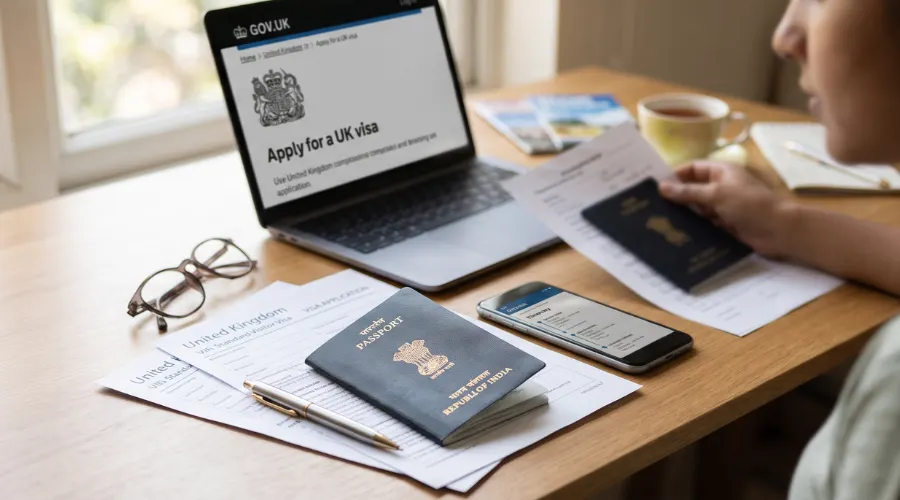
Planning a trip to the UK and wondering what has changed this year? You are not alone. Every year, lakhs of Indians visit London, Edinburgh, Manchester and beyond to see family, travel or attend meetings.
But rules, fees, and formats keep changing, which can feel confusing. This guide explains the UK visa requirements for Indians step by step, in plain language.
You will learn who needs a visa, what it costs, which documents to carry, and how to avoid common mistakes.
Do Indian Citizens Need a Visa to Visit the UK?
Yes. If you hold an Indian passport, you must get a visa before you travel to the UK. There is no visa on arrival. You will need the Standard Visitor visa for most short trips. It covers:
- Tourism and sightseeing
- Visiting family and friends
- Business meetings and conferences
- Short courses of study (up to 30 days)
- Medical appointments or treatment (in some cases)
You may have heard about the UK’s Electronic Travel Authorization (ETA). That is only for people from countries that do not need a visa, such as the USA or Australia. Indian citizens are not eligible, so please don’t pay for one by mistake.
Quick Overview: UK Visitor Visa Requirements for Indian Citizens in 2026
Here is a snapshot before we go deeper.
| Detail | Information |
| Visa needed? | Yes, Standard Visitor visa |
| Visa on arrival or ETA? | No, not available to Indians |
| Maximum stay | Up to 6 months per visit |
| Fee (6 months) | £135 (from 8 April 2026) |
| Apply how? | Online, then biometrics in India |
| Apply how early? | Up to 3 months before travel |
| Normal decision time | About 3 weeks |
| Proof of visa | Digital eVisa (no sticker for new grants) |
The New Visa Rules for Indians in 2026: What Changed?
Let us look at the new visa rules for Indians that matter most this year. Two big visa rule updates stand out: a higher fee and the move to digital visas.
1. The fee went up
The UK government announced a rise in many immigration fees, effective 8 April 2026. The six-month visitor visa went from £127 to £135, which is roughly ₹17,000 or more depending on the exchange rate. If you apply on or after that date, you pay the new fee. Your travel date does not matter.
2. eVisas are replacing Visa stickers
The UK is moving to a fully digital system. Instead of a sticker in your passport, you now get an eVisa, a digital record linked to your UKVI account. Here is what that means for you:
- You do not pay anything extra for the eVisa
- Your passport must be linked to your online account
- Each family member needs their own account
- You should check your eVisa details before you fly
Airlines now check your status digitally, so a wrong passport number or a missing link can cause trouble at the airport.
3. A clearer warning on travel bookings
Official guidance now says you should not book travel until you receive your decision. The UK government will not repay your travel costs if processing takes longer than expected. This is simple but important advice.
UK Visitor Visa Fees for Indians in 2026
Money matters, so let us keep it clear.
| Visa type | Approximate cost |
| Standard Visitor (up to 6 months) | £135 |
| Long-term visitor (2, 5 or 10 years) | Several hundred pounds or more |
| Marriage Visitor visa | Similar to the standard visitor fee |
| Priority service | Extra charge on top of the visa fee |
| Super Priority service | Higher extra charge, next working day |
You may also pay a small service charge to the visa application center in India. This is separate from the government fee. Exact rupee figures change with exchange rates. Always check the official Home Office fee calculator on the day you apply. Sites that quote different numbers are often out of date.
Who Can Get a UK Visitor Visa?
The UK looks at one big question: will you visit for a short time and then go home? To show this, you must prove that you:
- Are genuinely visiting for a valid reason
- Will leave the UK when your visit ends
- Can pay for your trip, or someone else will
- Can pay for your return or onward journey
- Have enough money without needing public funds or work
Your age, job, family, property and travel history all help tell this story. A strong file makes a clear, honest picture.
Documents You Need for a UK Visitor Visa
There is no single fixed list for everyone, but most Indian applicants should keep these ready.
Must-have documents
- A valid passport with at least one blank page
- Old passports if you have travel history
- Recent passport-style photo (as per the photo rules)
- Online application confirmation
- Proof of your job or business
- Bank statements (usually the last six months)
Documents that strengthen your case
| Your situation | Helpful documents |
| Salaried employee | Job letter, salary slips, leave approval |
| Business owner | Business registration, GST papers, income tax returns |
| Self-employed | Tax returns, client contracts, bank records |
| Student | Letter from school or college, leave permission |
| Retired person | Pension proof, savings proof |
| Homemaker | Spouse’s papers, proof of family support |
Trip-related papers
- A simple travel plan or itinerary
- Hotel bookings or an invitation letter if staying with family or friends
- Host’s address and, if useful, their passport or residence proof
- Proof of your relationship if visiting family
Documents not in English or Welsh need a certified translation. Please do not submit fake papers. A false document can lead to a ban of up to 10 years.
How Much Money Do You Need to Show?
This is the question everyone asks. The honest answer is that there is no fixed amount. The UK looks at whether your funds fit your trip. A two-week holiday needs less than a three-month stay. Your savings should also match your income and job.
A few tips:
- Show regular salary credits instead of a sudden large deposit
- Explain any big deposit with a document, such as a property sale
- Keep your bank statements recent and clear
- If someone else pays, send proof of their finances and your relationship
Large unexplained deposits are a common reason for doubt.
What You Can and Cannot Do on a Visitor Visa?
Knowing the limits protects your future travel.
| You can | You cannot |
| Visit as a tourist | Work or take a job |
| Meet family and friends | Study long-term |
| Attend business meetings | Sell goods or services to the public |
| Join a conference or event | Live in the UK through frequent visits |
| Do short courses (up to 30 days) | Claim public benefits |
| Take part in some amateur events | Get married (use a different visa) |
If you want to marry or register a civil partnership in the UK, you need the Marriage Visitor visa. If you are only passing through, you may need a transit visa.
Step-by-Step: How to Apply from India?
The process is simple once you know the order.
- Check your visa type. Use the official UK government tool to confirm you need the Standard Visitor visa.
- Fill in the online form. Create your account and answer every question honestly.
- Pay the fee. You pay online while submitting.
- Book your biometrics appointment. Choose a visa application center in your city.
- Visit the center. Give your fingerprints and photo, and submit your documents.
- Wait for the decision. Your application is reviewed, and you may be asked for more details.
- Receive your eVisa. Link it to your account and check it carefully.
You can apply up to three months before travel. A good habit is to apply about eight to twelve weeks early, especially in busy months.
UK Visa Processing Time for Indians
The official standard time for a visitor visa from India is about three weeks. Some applicants hear back sooner, while others wait longer in busy periods such as summer and December.
| Service | Typical timeline |
| Standard | About 3 weeks |
| Priority | About 5 working days |
| Super Priority | Next working day |
Faster services cost extra and do not guarantee approval. They only speed up the decision.
Why Do UK Visitor Visas Get Refused?
Most refusals come from small, avoidable gaps. Here are the usual reasons:
- Weak proof of ties to India, such as a job, family, or property
- Unclear or unexplained bank deposits
- A travel plan that does not match your income
- Mistakes or differences between the form and your documents
- Past immigration problems or overstays
- Doubts about why you are visiting
If your visa is refused, read the refusal letter carefully. It explains the reasons. You can fix the problems and apply again, but the old fee is not returned. Never repeat the same file and expect a different result.
Smart Tips to Improve Your Chances
A little care goes a long way. Try these simple habits:
- Answer every question honestly and consistently
- Keep your documents neat, recent and in order
- Write a short cover letter explaining your trip
- Show your reasons to return to India clearly
- Do not book non-refundable flights or hotels first
- Use only the official UK government website to apply
- Avoid agents who promise a guaranteed visa
No one can guarantee a result. Be careful with anyone who does.
Traveling with Family or Children
Each person needs their own application, including children. For a child, you should also show:
- Birth certificate
- Consent letter from a parent who is not traveling
- Proof of who will care for the child in the UK
For a couple or family, applying together can make the story easier to understand. But each person’s documents must still be complete.
Final Thoughts
Getting a UK visa does not have to be stressful. The UK visa requirements for Indians come down to a few clear ideas: apply early, tell the truth, show your ties to home, and prove you can afford the trip. With this year’s new visa rules for Indians, including the higher fee and the move to eVisas, small details like linking your passport matter more than ever. Keep an eye on future visa rule updates, because fees and processes can change at short notice. Prepare well, and your UK trip can start on a happy note.
FAQs
1. How much is the UK visitor visa fee for Indians in 2026?
A. The six-month Standard Visitor visa costs £135 for applications made on or after 8 April 2026. Longer visas and faster services cost more. Check the official fee calculator before paying.
2. Can Indians get a UK visa on arrival or an ETA?
A. No. Indian passport holders must apply for a visa before traveling. The ETA is only for visa-free nationalities, so it does not apply to Indian citizens.
3. How long does a UK visitor visa take from India?
A. Most standard applications are decided in about three weeks. Priority and Super Priority services are faster but cost extra. Busy seasons can cause delays, so apply early.
4. What is the UK eVisa, and do I still get a sticker?
A. The UK is replacing passport stickers with digital eVisas. Your visa is stored online and linked to your passport through your account. Check your details before flying.
5. How long can I stay in the UK on a visitor visa?
A. You can stay for up to six months per visit. Longer-validity visas, such as 2, 5, or 10 years, still limit each stay to six months at a time.