Imagine your flight to your best friend’s wedding gets canceled an hour before boarding, but instead of panic, you just smile, tap a button, and your hotel, meals, and new ticket are already sorted.
That’s travel insurance. It’s not the boring fine print your travel agent mentions in passing. It’s the quiet safety net that turns a travel disaster into a mild inconvenience. And for Indian travelers, who juggle everything from monsoon flight delays to last-minute visa hiccups, knowing exactly what it covers (and when you genuinely need it) can save you a lot more than money.
If you travel frequently, read this guide to the end to learn everything you need to know about travel insurance for flights
What is Travel Insurance?

Travel Insurance protects your trip from unexpected circumstances. It acts as a financial safety net that covers unforeseen losses, expenses or emergencies during domestic or international trips.
From medical emergencies to baggage issues, travel insurance compensates you or helps you with many travel problems. The cost is modest relative to the protection it provides, and for certain destinations, coverage is mandatory rather than optional.
Types of Travel Insurance
Feeling confused about travel insurance? Here’s a simple breakdown of the main types, explained without the jargon.
1. Domestic Travel Insurance
This covers you while traveling within the Country and covers problems like flight delays, lost baggage, and medical emergencies. Domestic travel insurance is often overlooked, but with rising flight cancellations and medical costs, it’s worth the small premium (usually a few hundred rupees).
2. International Travel Insurance
Travel insurance for flights is essential for international destinations like the US, Europe, or Schengen countries. Many countries (like Schengen nations) actually require a minimum insurance cover to even issue you a visa. It covers medical emergencies abroad, trip cancellation, lost passport, baggage loss, and sometimes flight delays. If you’re going abroad, this isn’t optional—it’s crucial
3. Single-Trip Insurance
This insurance is for one specific trip, including everything from departure to return. If you’re someone who travels once or twice a year. You can buy it and use it for that trip. Single-trip insurance expires once you’re back.
4. Multi-Trip (Annual) Insurance
If you’re a frequent flyer, like a businessperson, or someone who travels every couple of months, this covers you for multiple trips within a year under one policy. It works out cheaper than buying single-trip plans repeatedly. In addition, you can save you the hassle of re-purchasing insurance each time.
5. Student Travel Insurance
Specially designed for students going abroad to study. Along with medical cover, it often includes tuition fee protection (if you have to discontinue studies), sponsor protection, and loss of study materials. Many universities abroad make this mandatory for visa/admission.
6. Senior Citizen Travel Insurance
For older travelers, since regular travel insurance plans often have age caps or charge much higher premiums for seniors. These plans are tailored with higher medical cover, since older travelers are more likely to need it.
7. Family Travel Insurance
It covers your whole family under a single policy instead of buying separate ones for each member. It is usually cheaper and simpler to manage especially for family vacations abroad.
8. Group Travel Insurance
Group Travel Insurance is a single policy that covers everyone traveling together, like a college trip, company offsite, or friends’ holiday. It covers the usual basics: medical emergencies, trip delays, lost baggage, passport loss, and flight cancellation insurance for everyone in the group. One payment and one policy cover everyone. However, you should check per-person medical cover because group plans sometimes offer lower individual limits than standalone policies.
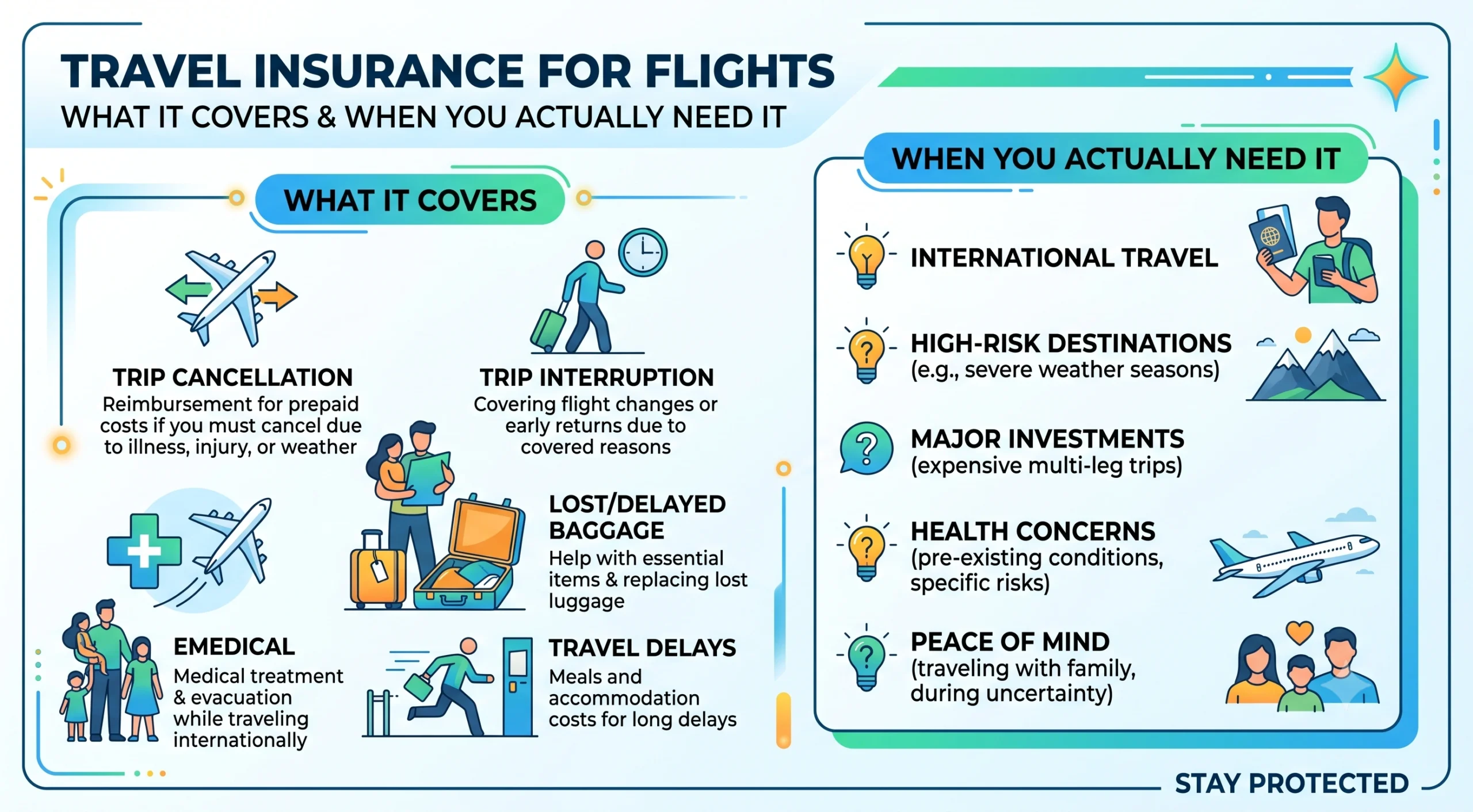
What does Travel Insurance for Flights cover?
Travel Insurance for Flights mainly protects you from the money and stress that come with flight-related mishaps. It covers situations outside of your control.
1. Flight Delay Cover
If your flight is delayed by a certain number of hours (usually 6-12 hours, depending on the policy), you’re compensated for the inconvenience with extra meals, a hotel stay if you’re stuck overnight, or a flat payout. This policy is useful during monsoon season or when airlines have operational issues.
2. Trip Cancellation
You can cancel your flight for a valid reason illness, a family emergency, or sometimes even visa rejection, and get compensated. Trip cancellation insurance covers your non-refundable ticket cost. Airlines rarely refund the full amount on their own, so this saves you from losing money.
3. Missed Connection
If you miss a connecting flight because of a flight delay, this insurance covers the cost of rebooking you on the next available flight along with any extra expenses like meals or a place to stay while you wait.
4. Baggage Delay or Loss
If your checked-in baggage doesn’t arrive with you, or gets lost entirely, you’re compensated for essential items you need to buy in the meantime (clothes, toiletries), or for the value of the lost bag and its contents.
5. Flight Cancellation by Airline
If the airline cancels your flight altogether, not you. You can get compensation for losses like non-refundable hotel bookings or other prepaid trip costs affected by the cancellation.
6. Emergency Medical Cover During Travel
If something happens mid-flight or right after landing, some plans include emergency medical evacuation or hospitalization cover. Medical insurance is considered especially important for international flights.
When Do You Actually Need Travel Insurance for a Flight?
When Travel Insurance Is Necessary
- International flights – Medical costs abroad are high, and some countries require insurance for visa approval.
- Long-haul or connecting flights – A delay on one leg can affect the rest of the journey, and rebooking abroad is costly.
- Non-refundable bookings – Flights, hotels, or tours that can’t be refunded are protected if you need to cancel.
- Peak travel seasons – Monsoon and festive periods see more delays and cancellations.
- Expensive trips overall – The higher the total trip cost, the more sense insurance makes because of the chances of unexpected losses.
When It’s Usually Optional:
- Domestic flights with low-cost, refundable bookings – Lower financial risk reduces the need for insurance in such cases.
- Short trips with minimal prepaid expenses – You may not need insurance for short trips where there is less to lose if plans change.
How to Choose the Right Travel Insurance
Do consider these factors before choosing the travel insurance for your next trip
- Check the medical cover amount – Make sure it’s appropriate for expensive treatment abroad, not just a token amount.
- Review trip cancellation terms – See what counts as a “valid reason” and how much of your non-refundable bookings are covered.
- Compare baggage and delay cover – Check the minimum delay hours required to claim, and the payout for lost or delayed baggage.
- Check pre-existing disease clauses – Some plans exclude pre-existing conditions or charge extra, so read this carefully if it applies to you.
- See if it covers your destination – Some plans have country-specific exclusions, so confirm your destination is fully covered, especially for Schengen visas.
- Check the claim process – A simple, quick claim process matters; look at reviews or claim settlement ratios before buying.
- Compare premium vs coverage – Don’t just pick the cheapest plan; compare what you’re actually getting for the price.
- Check add-ons if needed – Adventure sports cover, COVID cover, or rental car cover can be added if relevant to your trip.
Final Thoughts
Travel insurance isn’t just another add-on to your flight booking. It can help turn an expensive travel problem into a more manageable one by covering eligible costs from unexpected events. It may include medical emergencies, flight delays, baggage problems or covered cancellations. The key isn’t simply buying insurance. It’s choosing a policy that fits your trip. Consider your destination, trip length, total prepaid costs, and how often you travel.
FAQs
Q. Does travel insurance cover missed flights?
A. Often, yes, if the cause is covered (bad weather, airline delay, illness) not if you simply arrive late. Check the policy’s “missed connection” clause.
Q. Is it worth getting travel insurance for flights?
A. Usually worth it for expensive/non-refundable tickets or international trips; less needed for cheap, flexible domestic flights.
Q. Can I get travel insurance just for the flight?
A. Yes, standalone flight/trip insurance exists, though many insurers push full trip packages (flights + hotels + activities) instead