
Ever booked a flight, felt proud of the price, and then heard the person next to you paid half? It happens to almost everyone. Airfares change all the time, and the rules are not always clear.
The good news is that a few smart habits can save you real money. In this guide, you will learn How to Find Cheap Flights In 2026 in simple steps, from picking the right booking time to using price alerts.
We will also cover refunds, delays, and your rights as a traveler. No tricks, no jargon, just clear advice you can use on your next trip.
Why Flight Prices Keep Changing?
Airlines use smart software to set prices. The software looks at how many seats are left, how close the date is, the season, and how many people are searching. That is why the same seat can cost different amounts on different days. Think of it like buying fruit. Mangoes are cheap in season and costly out of season. Flights work in a similar way. Once you understand this, you can plan around it instead of fighting it.
When to Book: Finding the Sweet Spot
Booking too early is not always cheap, and booking too late is almost always costly. Studies do not agree on one perfect day, but they point to similar ranges.
| Trip type | Usually the best time to book | Good to know |
| Domestic (within one country) | 1 to 3 months before | One big study of five years of search data put the average best day at about 39 days out. Another industry report found 15 to 30 days worked well. |
| International | 2 to 8 months before | Europe: about 4 to 5 months. Asia: about 3 to 4 months. Mexico and the Caribbean: about 2 to 3 months. |
| Holidays and peak season | 3 to 6 months before | Prices rise fast as seats fill up. |
| Last minute (under 2 weeks) | Only if the price looks fair | Fares are often 20% to 30% higher. |
Here is the simple rule. Start watching prices early, and buy when the price drops into a range you are happy with. If you see a good fare and your dates are fixed, do not wait for a miracle.
The Best Days and Times to Fly
The day you book matters less than the day you fly. Most data shows that Tuesday and Wednesday are the cheapest days to travel, while Friday and Sunday are usually the most expensive. Some reports also show Saturday as a good option for domestic trips.
Here are a few easy habits:
- Fly midweek when you can.
- Choose early morning or late-night flights, which are often cheaper.
- Avoid the busiest days around big holidays and school breaks.
- Check a full month of prices before you pick your dates.
Use the Right Tools
You do not need ten apps. You need a few tools used the right way. When people ask me how to find cheap flights, I always start here.
- Price calendars: These show the cheapest days across a whole month, so you can shift your trip by a day or two and save.
- Map or “explore” search: If you are open about where to go, search from your home airport with no fixed destination. You will see the cheapest places first.
- Price alerts: Set an alert for your route and let your email do the watching. You will get a message when the fare drops.
- Airline websites: Always check the airline’s own site before you buy. Some low-cost airlines do not show up in every search.
- Deal newsletters: Some services find real discounts and send them to you. This is helpful if you can travel on short notice.
Stay Flexible and Save More
Flexibility is the biggest money-saver there is. Even small changes can cut your fare a lot.
- Shift your dates by a few days: Moving by one to three days can change the price by a big amount.
- Try nearby airports: A city with two or three airports often has very different prices at each one. Just count the cost of getting there.
- Mix one-way tickets: Sometimes two one-way tickets on different airlines are cheaper than one round trip.
- Accept a layover: Direct flights cost more. A short stop can save a lot, but avoid very tight connections.
- Travel in the shoulder season: The weeks just before or after peak season often have good weather and lower prices.
Just a brief note on “self-transfer” tickets, which happen when you book two flights but don’t connect through the airline. In the event of delays on your first flight, you would not be eligible for protection on your second flight. It is wise to allow ample time between flights or avoid self-transfer tickets for important journeys.
Watch the Total Cost, Not Just the Fare?
A cheap ticket can turn costly fast. Low fares often leave out things you may need. Before you pay, add up the full cost.
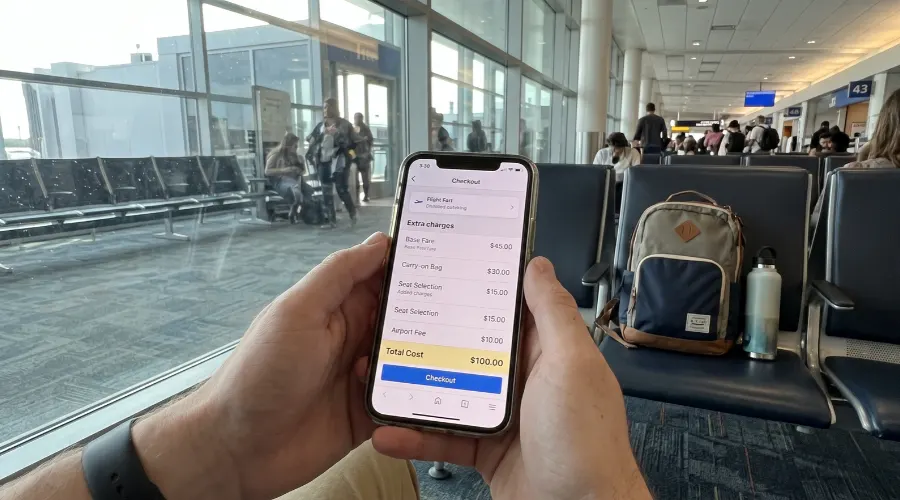
| Extra cost | Why it matters | Simple tip |
| Checked bag | Can cost as much as the ticket on short trips | Pack light or compare bag-included fares |
| Carry-on bag | Some basic fares charge for it | Check the bag size rules first |
| Seat selection | Choosing a seat can add a fee | Skip it if you do not mind a random seat |
| Airport transfer | Far airports cost more to reach | Add taxi or train costs to the fare |
| Food and water | Many cheap flights charge for meals | Carry snacks and an empty bottle |
A fare that looks $40 cheaper may end up $30 costlier after bags and seats. Always compare the final price on the payment page.
Free Cancellation Flights: Your Safety Net
Whenever plans change, booking can be a painful experience. This makes learning about free-cancellation flights important before you buy. The 24-hour rule (United States). If you make a reservation directly from an airline and your travel date is more than a week away, the airline must either allow you to cancel the flight 24 hours after making the reservation and receive a full refund, or “lock in” the fare for 24 hours. This applies to all flights either entering, leaving, or flying within the U.S., even for the cheapest fares available. Increments of the U.S. rules do not apply to flights booked through travel agents and may vary by terms used.
| Fare type | Change or cancel? | Best for |
| Basic or saver | Usually no refund after 24 hours | Fixed plans |
| Standard | Often allows changes with no fee, usually as credit | Most travelers |
| Flexible or refundable | Full refund to your card | Uncertain plans |
A few more ways to protect your money:
- Book at least a week ahead so the 24-hour rule applies.
- Set a phone reminder for the cancellation deadline.
- Read the fare rules, not just the headline price.
- Think about travel insurance if your trip is costly or you have health or work risks.
- Pay with a card that offers extra protection.
Airline Policy Updates You Should Know in 2026
Rules change often, so it pays to read the latest airline policy updates before you book. Here is what matters most right now.
- Automatic refunds in the U.S. – According to the federal law that took effect in 2024, airlines must pay a refund in cash, not just offer a voucher, when your flight is canceled, or the change is significant and you choose not to accept the alternate option. A major change means a delay of three hours or more on domestic routes and six hours or more on international flights. You do not need to make any requests to qualify for the refund.
- Fewer change fees: Many big airlines no longer charge change fees on standard fares. Basic fares are still strict.
- EU passenger rights reform: In July 2026, the European Parliament approved a major update to the EU’s passenger rights law, and the Council confirmed it soon after. Official research from the Parliament says the three-hour delay rule stays. Reports also say the new rules target hidden fees, such as charges for seating children next to an adult. The current rules still apply until the new ones take effect, which isn’t expected before the second half of 2027.
- Baggage rules keep shifting: Airlines often change bag sizes and fees, so check again just before you fly.
My advice is simple. Read the airline’s current policy page on the day you book, and take a screenshot. If a problem comes up later, you will have proof.
Flight Delay Compensation Guide
This short flight delay compensation guide can save you hundreds. Your rights depend on where you fly, so here is a quick view.
| Region | When you can claim | Typical amount |
| European Union | Arrival delay of 3+ hours, or cancellation, when the airline is at fault | €250 (under 1,500 km), €400 (1,500 to 3,500 km), €600 (over 3,500 km) |
| United Kingdom | Same 3-hour rule | £220, £350 or £520 depending on distance |
| Canada | Delay within the airline’s control, 3+ hours | CAD 400 to 1,000 depending on delay length (for large airlines) |
| United States | No fixed cash payment for delays | Refund if the airline cancels or changes your flight a lot; extras depend on the airline |
Not all delays are eligible for compensation. Generally, companies do not have to pay compensation if the cause of the delay is deemed to have occurred outside the airline’s control (e.g., bad weather, industrial action). On the other hand, factors such as faulty equipment or a lack of crew are always considered the airline’s responsibility.
If your flight is delayed, follow these steps:
- Note the planned and actual arrival times.
- Keep your boarding pass, booking email, and receipts for food, water, or a hotel.
- Ask the airline for the reason in writing.
- File your claim on the airline’s website or by email. Keep copies of every message.
- If they say no, you can escalate to a national enforcement body or use a claims service.
Time limits vary by country, from a few years to six years in some places. Do not wait too long.
How to Find Cheap Flights In 2026: Other Smart Ways to Save
- Look for sales: Airlines run sales during quiet travel periods. Sign up for their emails and check regularly.
- Use points and miles: Even a small balance can cover part of a trip. Credit card sign-up bonuses can help if you pay your bill in full each month.
- Be careful with mistake fares: Sometimes airlines list a wrong price. If you spot one, book quickly, but don’t pay for hotels or other plans until the airline confirms the ticket.
- Think about price match or price drop rules: Some airlines give you a credit if the fare drops after you book.
- Fly off-peak: The cheapest months for most routes are in quieter seasons, such as January and late summer in many markets.
Common Myths About Cheap Flights
- “Clear your cookies and prices will fall.”
There is little proof that this works. Fares change because of seats and demand, not because of your browser.
- “There is one magic day to book.”
Not really. The booking window matters much more than the day of the week.
- “Last-minute is always cheaper.”
Rarely. Last-minute fares are often higher, especially on popular routes.
- “Budget airlines are always the cheapest.”
Only if you travel light. With bags and seats added, a regular airline can win.
Final Thoughts
If you want to find a low ticket price, it is not only about luck but also about good habits. Watch ticket prices long before buying, stay flexible with dates and airports, and calculate the total price before you buy. Read the cancellation rules. Always save your booking details and follow any changes in the airline’s regulations. If there is an issue, remember that you can sometimes get your money back.
FAQ
1. What is the cheapest day to book a flight?
A. There is no single magic day. Some studies lean toward weekends or Fridays, others differ, and the savings are small, often 2% to 6%. Booking in the right window and flying midweek will help you far more.
2. How far ahead should I book to get a cheap flight?
A. For domestic trips, aim for about one to three months ahead. For international trips, two to eight months is a safe range, depending on the region. Book earlier for holidays.
3. Can I cancel a flight for free after booking?
A. In the U.S., yes, within 24 hours if you booked directly and your flight is at least seven days away. After that, it depends on your fare. Flexible fares, and some standard fares, give more freedom than basic ones.
4. Will I get money if my flight is delayed?
A. It depends on where you fly. In the EU and UK, a delay of three hours or more can mean €250 to €600 or £220 to £520 if the airline is at fault. In the U.S., you get a refund if you decline a big change, but there is no fixed cash payment for most delays.
5. Are budget airlines really cheaper?
A. Often, yes, for light travelers with no checked bag. But fees for bags, seats and extras can add up fast. Always compare the full price before you decide.